
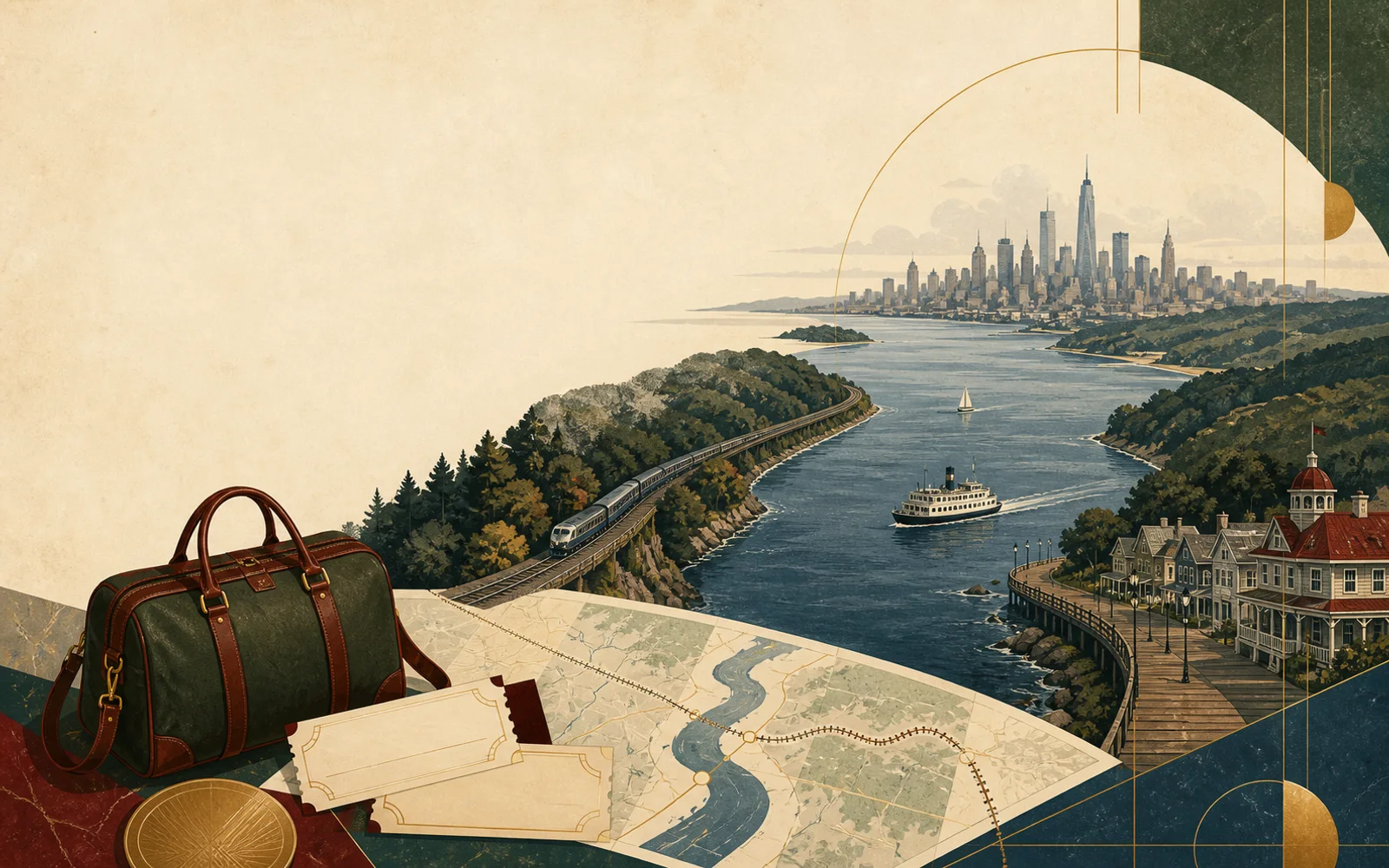
Original editorial illustration of rail, river, coast, and country routes from New York City.
A good weekend getaway from NYC should feel different before the first full day is over. It should also leave enough time for a meal, a walk, and a slow morning. A six-hour transfer can turn two nights away into one rushed day.
These 15 trips balance travel effort with a clear reason to go. Some work by train. Others reward a car. Travel times are broad estimates from Manhattan and can change with the route, traffic, season, and connection.
How we ranked these weekend getaways
We gave the most weight to ease from New York City. We then looked at the range of things to do, places to stay, year-round appeal, and how clearly each place fits a type of trip.
A higher rank does not mean a place is grander. It means the trip offers a strong change of scene with less friction for most readers. Each choice includes a real drawback so you can match the place to your time and mood.
Quick picks
| Best for | Our pick |
|---|---|
| Car-free art trip | Beacon |
| Village and trails | Cold Spring |
| Food and design | Hudson |
| Beach and music | Asbury Park |
| Fast city break | Philadelphia |
1. Beacon, New York
Best for: Art, river views, and an easy train trip.
Beacon ranks first because the whole weekend can work without a car. Metro-North’s Hudson Line runs from Grand Central to Beacon. Main Street has food, small shops, and galleries, while Dia Beacon gives the trip one strong indoor anchor.
Walk the riverfront, leave time for the museum, and book a room near Main Street or the station. Hikers can add a trail, but should check the route and daylight first.
Drawback: Rooms can fill on fall and summer weekends. Some trail starts need a taxi or careful walk.
2. Cold Spring, New York
Best for: A compact village with a harder outdoor day.
Cold Spring also sits on the Hudson Line. The village center, riverfront, cafés, and small stores are close enough for a car-free stay. Trails in the Hudson Highlands add a bigger goal when the weather is good.
Choose Cold Spring over Beacon when a quiet main street and hiking matter more than a major museum. Stay in town, start early, and keep a rain plan.
Drawback: The most popular hikes can be steep and busy. A small lodging base means fewer last-minute choices.
3. Hudson, New York
Best for: Restaurants, antiques, architecture, and a slower two-night stay.
Hudson feels farther from New York than the train time suggests. Amtrak reaches the city from Penn Station, and Warren Street holds much of the food and shopping. The mix works in cold weather as well as summer.
Plan one long meal, one unhurried shopping block, and a walk toward the river. A hotel near Warren Street makes the trip simple.
Drawback: Hudson can be costly for its size. Country sites outside town need a car or arranged ride.
4. New Paltz, New York
Best for: Shawangunk Ridge hikes and a lively small town.
New Paltz combines a walkable center with access to Mohonk Preserve, Mohonk Mountain House, and Minnewaska State Park Preserve. The hiking trails and outdoor recreation suit travelers who want a serious outdoor day and an easy dinner after it.
A car gives the most freedom. Bus service can reach town, but trailheads and some lodging add another transfer. Check parking and trail rules before the weekend.
Drawback: This is less smooth without a car. Popular trail areas can close lots when they fill.
5. Kingston, New York
Best for: Hudson Valley history with more room to spread out.
Kingston has two useful centers: the Stockade District and the Rondout waterfront. The split gives the weekend range, from old stone buildings and cafés to river walks and maritime history.
Stay near the area you will use most. A car or local ride makes it much easier to move between districts and add nearby towns.
Drawback: Kingston is not one tight walking loop. Poor trip planning can lead to extra rides.
6. Woodstock, New York
Best for: Arts, mountain air, and a Catskills mood.
Woodstock has galleries, music roots, independent stores, and access to the eastern Catskills. It works for travelers who want a town base with short drives to trails and country roads.
Two nights give the place more room than a day trip. Use one day for the town and one for nature. The official New York tourism guide describes the Catskills as a hiking and arts region, which is the right frame for the trip.
Drawback: The name draws crowds. A car helps, and fall traffic can make the return slow.
7. Tarrytown and Sleepy Hollow, New York
Best for: River history close to the city.
Tarrytown is one of the shortest true breaks on this list. Metro-North serves the area, and a weekend can mix the Hudson waterfront, old estates, village streets, and Sleepy Hollow history.
Go outside the fall rush for a calmer trip. In October, book rooms and timed events well ahead.
Drawback: The two villages and major sites are not all in one small center. October prices and crowds can jump.
8. Nyack, New York
Best for: A low-key river town with shops and cafés.
Nyack sits west of the Hudson, about 25 miles from New York City. Its downtown is known for small shops, food, and access to river views. It can feel more like a pause than a packed sightseeing trip.
Drive for the cleanest weekend. The road route can cross the George Washington Bridge. Bus travel is possible, but it is less direct than the Hudson Line trips on the east bank.
Drawback: There is no direct Manhattan train. The trip loses ease when traffic is heavy.
9. Montauk, New York
Best for: A full beach weekend at the far end of Long Island.
Montauk earns its place because the ocean setting is a full reset. Beaches, a lighthouse, seafood, and long walks can fill two or three days without much structure.
The Long Island Rail Road can make the trip car-free, though the ride is long and local distances may need taxis or bikes. A car gives more range but can face severe summer traffic.
Drawback: Summer rooms are expensive and book early. For one night, the travel effort is hard to defend.
10. Greenport, New York
Best for: A North Fork harbor stay with food and wine nearby.
Greenport has a compact waterfront center, restaurants, shops, and ferry views. It can serve as a base for the wider North Fork, where farms, vineyards, and beaches spread along the roads.
Train service reaches Greenport, but schedules are limited. Stay near the center for a car-free weekend. Bring a car when the farms and vineyards are the main goal.
Drawback: The wider North Fork is not easy to cover on foot. Late return choices can be thin.
11. Fire Island, New York
Best for: A car-free beach community in warm weather.
Fire Island trades roads for ferries, boardwalks, sand, and small communities. Pick the exact community before booking because each one has a different ferry point and mood.
Rail, a local transfer, and a ferry can make the trip work without a car. Pack light. Groceries, weather, and ferry times matter more here than they do on a normal hotel weekend.
Drawback: This is a seasonal trip with several moving parts. Wind or a missed ferry can change the day.
12. Asbury Park, New Jersey
Best for: Beach time, live music, and a shore town with energy.
Asbury Park mixes a boardwalk and beach with music rooms, bars, and restaurants. That range makes it stronger than a pure beach trip when the weather turns.
NJ Transit serves the city from New York, though some trips need a transfer. Stay near the beach or downtown and check the walk from the station.
Drawback: Summer weekends can be loud and busy. Beach access and events may add cost.
See the current city overview on the official New Jersey tourism site.
13. Cape May, New Jersey
Best for: Victorian streets, quiet meals, and a longer shore weekend.
Cape May feels far from Manhattan in style as well as distance. Historic houses, porches, beaches, and birding make it a strong two- or three-night trip.
Drive or use a long bus route. Once there, the center is easy to enjoy on foot or bike. Spring and fall can be calmer than peak summer.
Drawback: The transfer can take three hours or more. It is not a short one-night escape.
14. Philadelphia, Pennsylvania
Best for: Museums, history, and a fast rail break.
Philadelphia is one of the fastest big changes of scene by train. A compact first weekend can pair Old City, the museum area, and a strong food plan without a car.
Use Amtrak for the fastest ride or compare the longer local-rail route. Stay near the part of the city you plan to explore; cross-town trips can eat the time saved on rail.
Drawback: This is another city, not a rest in nature. A packed museum plan can feel as busy as New York.
15. New Haven, Connecticut
Best for: Campus museums, architecture, and a food-led rail trip.
New Haven works when you want a small city with a clear center near Long Island Sound. Yale’s campus, museums, theaters, and local pizza give the weekend a simple shape.
Metro-North and Amtrak both serve New Haven. Check the station, hotel, and museum hours as one plan. Many campus museums have set closing days.
Drawback: The trip feels urban and focused. It will not satisfy a traveler who wants woods, water, or a resort.
Best car-free weekend getaways from NYC
Beacon, Cold Spring, Tarrytown, Hudson, Philadelphia, and New Haven are the easiest rail-first choices on this list. Asbury Park, Greenport, Montauk, and Fire Island can also work, but schedules and transfers deserve more care.
Check the live timetable, not an old blog estimate. The MTA Hudson Line schedule covers Tarrytown, Cold Spring, and Beacon. I LOVE NY also keeps a useful car-free New York getaway guide.
Book lodging within a short walk of the train station when possible. A cheap room that needs four taxi rides may cost more than a central one. These weekend getaways from NYC are easiest when the main street, food scene, and a few historic sites are all close.
How to choose by season
Spring: New Paltz, Beacon, Cold Spring, Cape May, and New Haven work well before summer heat. Rain can change trail plans.
Summer: Montauk, Greenport, Fire Island, and Asbury Park on the Jersey Shore give the clearest beach break. Prices and traffic are highest. Book outdoor activities before the busiest weekends.
Fall: The Hudson Valley and Catskills have strong fall foliage, hiking trails, and high demand. Book early and avoid a tight drive home on Sunday.
Winter: Hudson, Philadelphia, New Haven, Beacon, and the hotel-led Hudson Valley trips have enough indoor depth. Small beach towns can feel very quiet.
Choose a weekend trip by mood
For hiking and mountain views
Start with Cold Spring or New Paltz. Cold Spring is easier by train. New Paltz gives you more trail range with a car.
Woodstock is better when the town matters as much as the hike. Kingston can also work as a base. Both need more road time than Beacon or Cold Spring.
For food, shops, and a good room
Hudson is the clear first pick. It has enough food and shops for a full day. It also has a wide mix of inns and small hotels.
Beacon is the better deal for a short first trip. Asbury Park adds bars and music. Philadelphia has the most choice, but it feels like a city break.
For a beach weekend
Choose Asbury Park for the shortest mix of beach and night life. Choose Fire Island for a car-free shore mood. Choose Montauk for the widest ocean break.
Greenport is a harbor town, not an ocean beach town. Cape May has both beach time and old streets. It also needs more travel time.
For art and culture
Beacon has one major art stop and an easy main street. New Haven pairs small museums with a campus. Philadelphia has the deepest museum list.
Woodstock suits a music and gallery trip. Hudson is best when art, design, food, and shops should all share the weekend.
What kind of stay should you book?
Small inn: Good for Cold Spring, Hudson, Cape May, or Bucks County. Ask about stairs, late check-in, and breakfast hours.
Boutique hotel: Good for Beacon, Hudson, Asbury Park, Kingston, or Philadelphia. This can give you a front desk and a central room without a large resort.
Resort: Good when the pool, spa, lake, or grounds are the point. A resort can make a rainy day easier. It can also keep you far from town.
Rental home: Good for a group, a kitchen, or a long weekend. Check local rules, cleaning fees, parking, and the true walk to town.
Camp or cabin: Good for a nature trip. Pack for cold nights. Check water, heat, bath, fire, and check-in rules before you pay.
How far is too far for two nights?
For one night, try to stay under two hours each way. Beacon, Cold Spring, Tarrytown, Nyack, Asbury Park, New Haven, and Philadelphia can fit that rule on a good route.
For two nights, a three-hour trip can work. That opens Montauk, Cape May, the deeper Catskills, and parts of the Adirondacks. Leave before traffic builds.
For three nights, Lake George, Lake Placid, the Finger Lakes, Martha’s Vineyard, or Nantucket become more fair to the time spent in transit. These are fine getaways, but they are not the short trips ranked above.
Longer weekend ideas beyond the main list
Lake George and Lake Placid
Lake George suits a family lake trip. Lake Placid suits hiking, snow sport, and a mountain-town stay. Both need a longer drive from New York City.
Summer and fall book fast. Winter roads can be hard. Give either place at least three nights when you can.
The Finger Lakes
The Finger Lakes fit wine, farms, gorges, and lake views. The region is large. Pick one lake or town instead of trying to cover all of it.
This is a long weekend from NYC, not a quick break. A car is close to a must. Fall harvest and college dates can raise room rates.
Bucks County, Pennsylvania
Bucks County works for old inns, Delaware River towns, and scenic drives. New Hope has art galleries, antique shops, and restaurant options in a small center. The Mercer Museum adds a history stop in Doylestown. The area can suit a couple who wants quiet more than a list of sights.
A car makes the trip much easier. Food choices can close early. Check the exact town before you book a rural room.
Pocantico Hills and Stone Barns
This part of the Hudson Valley is close to New York City. It suits a food-led day or one quiet night. Blue Hill at Stone Barns or a farm event may need a hard-to-get booking.
Do not plan the whole weekend around one table until it is booked. Tarrytown can serve as the wider base. Add river walks and old estates to fill the trip.
The Hamptons and eastern Long Island
The Hamptons suit beach houses, shops, and long summer meals. The North Fork suits farms, wine, and harbor towns. Both parts of Long Island can face heavy traffic.
Use the train when the schedule and hotel fit. A car gives more range. It can also trap a Sunday return in traffic.
Saratoga Springs and coastal Rhode Island
Saratoga Springs adds a New York State park, mineral baths, and a walkable center to a longer upstate New York trip. Coastal Rhode Island adds beaches and small towns, but the route is too long for most two-night plans.
Give either trip three nights. They work better as a long weekend getaway than a quick break from New York City.
Martha’s Vineyard or Nantucket
Both islands offer a true coast break. Both also add a flight or a long drive and ferry. Summer seats, cars, and rooms need early plans.
Save these islands for three or four nights. A normal two-night weekend can lose too much time to the transfer.
Day trips from NYC that can become weekends
Beacon, Cold Spring, Tarrytown, Nyack, and Philadelphia all work as day trips from NYC. Add a night when you want dinner without a race to the last train.
A day trip is better when the place has one main goal. A weekend is better when the room, evening, and slow morning are part of the point.
Weekend getaways NYC travelers can plan fast
Start each weekend getaway with the route. Pick one place on a direct train or one clear road. Then pick a room near the part of town you will use.
For a first weekend getaway from NYC, choose the Hudson Valley, Jersey Shore, or a close rail city. Beacon gives easy Hudson River access. Asbury Park gives a short beach break. For a long weekend, add the Catskills, Lake George, or the Finger Lakes in New York State.
The best weekend getaways from NYC do not need a full list of sights. They need one main reason to go, a good place to sleep, and a safe trip home. Match the destination to the season, since a beach weekend getaway and a winter city break solve different needs.
How much should a weekend getaway cost?
Start with travel and the room. Add local rides, parking, meals, fees, and one main paid event. A low room rate far from town can add taxi cost.
Train prices can rise near the date. Gas, tolls, and parking can make a car cost more than it seems. Split the full cost by the number of people, not just the room.
Keep a small weather fund. Rain can replace a free hike with a museum, spa, or long meal.
How to keep a car-free getaway easy
- Book a room near the station or main street.
- Check the last train before you book dinner.
- Save the live schedule to your phone.
- Ask the hotel about a local taxi before you arrive.
- Pack for one carry bag and changing weather.
- Keep one indoor plan for rain or high heat.
A simple two-night plan
Leave after work on Friday only when the arrival is easy and the hotel accepts a late check-in. Otherwise, travel Saturday morning and return Monday if you can. Sunday-night rooms are often easier to find.
Give Saturday one main goal. Keep Sunday to a meal, a walk, and the trip home. A weekend feels longer when every hour does not have a booking.
Bottom line
Beacon is the best all-around weekend getaway from NYC for a first trip because rail, art, food, and the river fit together with little friction. Cold Spring is better for a village-and-hike plan. Hudson is better for food, design, and a slow room-led stay.
If you want the getaway to center on a hotel, compare our upscale Manhattan hotel guide for a city stay or use the wider New York resort terms in our future pipeline. For paid city sights before or after the trip, see the New York Explorer Pass review.